Livrare gratuită pentru comenzile de peste 349 LEI prin Easybox, FAN BOX și Coletăria.

Faceți parte dintr-o comunitate de iubitori de cărți din întreaga lume și beneficiați de o mulțime de avantaje
Creați-vă un cont gratuit
Transport gratuit la punctele de livrare Pick Up peste 349.00 lei
Packeta 17.50 lei
Urgent Cargus 30.50 lei
Easybox 22.50 lei
Punct FAN 18.50 lei
Punct DPD 19.50 lei
Curier DPD 27.50 lei
FAN Courier 27.50 lei
 Contact
 Cum să cumpăr

Ajutor
Livrare
Packeta 17.50 lei
Urgent Cargus 30.50 lei
Easybox 22.50 lei
Punct FAN 18.50 lei
Punct DPD 19.50 lei
Curier DPD 27.50 lei
FAN Courier 27.50 lei
Transport gratuit la punctele de livrare Pick Up peste 349.00 lei
Consilier de cumpărături
Suntem aici pentru tine!
031 22 95 182
Contul meu
▸
Gol :-(
0
Livrare gratuită pentru comenzile de peste 349 LEI prin Easybox, FAN BOX și Coletăria.
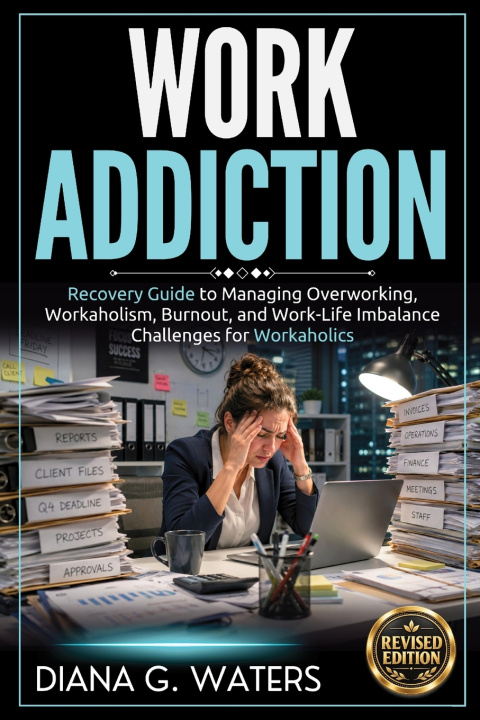
Work Addiction
Recovery Guide to Managing Overworking, Workaholism, Burnout, and Work-Life Imbalance Challenges for Workaholics
Limba
 engleză
Carte
Carte broșată
YOU FINISH WORK. BUT WORK ISN'T FINISHED WITH YOU.You close your laptop, then remember one more emai...
Descrierea completă
Codul Libristo: 54399405
?
 45 b
 Curând
 Nou
45 b
Curând
Nou
97.81
lei
Așteptăm intrarea în stoc
Ediția 10. 11. 2026
Până la 30 de zile pentru returnare

YOU FINISH WORK. BUT WORK ISN'T FINISHED WITH YOU.
You close your laptop, then remember one more email. You sit down with your family, but your mind is still on tomorrow's tasks. You finally have time to rest, yet doing nothing makes you feel guilty.You tell yourself it's just a busy season. But the busy season never seems to end.
When did being hardworking become so hard to switch off?
Working hard isn't the problem. Many people put in long hours because their jobs, businesses, or financial responsibilities demand it. The concern begins when work becomes difficult to control-even when you have a genuine chance to stop-and your health, relationships, and personal life keep paying the price.
WORK ADDICTION by Diana G. Waters is a practical, evidence-informed guide to understanding compulsive working, recognizing burnout, and building a more sustainable relationship with your job.
DOES ANY OF THIS SOUND FAMILIAR?
You keep checking messages long after your workday ends. You say yes to another request when your schedule is already full. You redo work that was good enough the first time. A free evening feels less relaxing than another hour at your desk.Perhaps you are praised for being the person who always delivers. Perhaps your workplace leaves you little choice. Or perhaps both outside demands and your own expectations are keeping you stuck. This guide helps you understand the difference instead of treating every long workday as an addiction.
INSIDE THIS BOOK, YOU'LL LEARN HOW TO:
- Recognize the difference between healthy dedication, overworking, work addiction, burnout, and work-life imbalance.
- Understand how perfectionism, achievement pressure, guilt, emotional avoidance, and workplace expectations can reinforce excessive working.
- Set realistic boundaries, manage demanding workloads, and communicate limits while respecting genuine responsibilities.
- Handle the urge to keep working, including discomfort during downtime.
- Reduce after-hours emails, constant notifications, and the pressure to remain available.
- Recognize exhaustion, consider when professional assessment may be needed, and make room for appropriate recovery.
- Reconnect with family, friendships, interests, and everyday experiences that have been pushed aside.
- Work productively without judging your worth by hours spent working or tasks completed.
- Identify early warning signs, respond constructively to setbacks, and adapt your routines when life gets demanding again.
MORE THAN AN EXPLANATION-PRACTICAL TOOLS YOU CAN USE.
Alongside clear guidance, you'll find three resources designed to support your next steps:- Work Addiction Self-Reflection Checklist to examine your working patterns without jumping to a diagnosis.
- Practical Boundary and Disengagement Tools to help you consider workable limits and ways to step away from unnecessary work.
- Personal Recovery and Maintenance Plan to organize priorities, anticipate difficulties, and review your progress.
YOU DON'T HAVE TO STOP CARING ABOUT YOUR WORK.
You may love your career. You may need the income. You may be running a business, caring for family, or working in a job where demands aren't always negotiable. This book respects those realities. It doesn't tell you to quit your job, abandon ambition, or achieve a perfect fifty-fifty balance.Instead, it helps you distinguish what genuinely needs your attention from the habits and pressures that keep pulling you back. And when self-help isn't enough, it explains why seeking appropriate support can be part of moving forward.
Your work can matter deeply without taking over everything else.
Start building a healthier relationship with work-one realistic decision at a time.
Actriță
&
Poliglotă
EWA KASP
pentru
Redă videoclipul


Libristo are cea mai mare selecție de literatură în limbi străine. De aceea îmi cumpăr cărțile de aici.
Informații despre carte
Titlu complet
Work Addiction
Autor
Diana G. Waters
Limba
engleză
engleză
Legare
Carte - Carte broșată
Data publicării
2026
Număr pagini
230
EAN
9798167144514
Codul Libristo
54399405
Editura
Independently published
Greutatea
315
Dimensiuni
152 x 229 x 12

Dăruiește această carte chiar astăzi
Este foarte ușor
1 Adaugă cartea în coș și selectează Livrează ca un cadou 2 Îți vom trimite un voucher în schimb 3 Cartea va ajunge direct la adresa destinatarului
Consilier de cărți Libroamiko
Prin utilizarea acestui chat, comunicați cu inteligența artificială generativă. Prin utilizarea acestuia, sunteți de asemenea de acord cu prelucrarea datelor cu caracter personal.
Bună ziua! Sunt Libroamiko, consilierul dumneavoastră de cărți.
Cu ce vă pot ajuta?
Bună ziua, sunt Libroamiko, vă pot ajuta?