
 Contact
 Cum să cumpăr
Livrare
Consilier de cumpărături
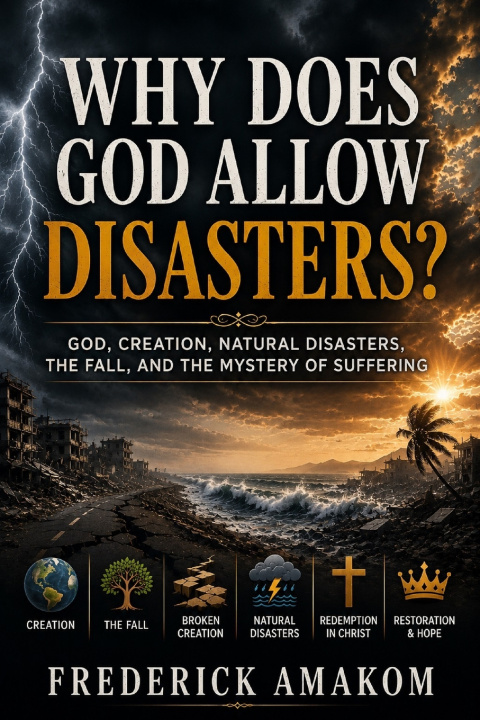
WHY DOES GOD ALLOW DISASTERS?
God, Creation, Natural Disasters, the Fall, and the Mystery of Suffering
 engleză
 86 b
86 b
 Nou
Nou
Până la 30 de zile pentru returnare

When an earthquake destroys a city, a flood takes lives, or a devastating storm leaves families homeless, one question inevitably rises from the ruins:
If God is good, powerful, and sovereign, why does He allow disasters to happen?
This is one of the hardest questions facing Christian faith.
Why Does God Allow Disasters? does not offer easy answers or pretend that every tragedy can be explained. Instead, Frederick Amakom takes the reader through the biblical story of creation, the Fall, the curse, suffering, Satan, divine protection, death, resurrection, and the ultimate restoration of creation.
The book begins with a fundamental question: Was the world always like this?
Genesis describes God's creation as "very good." Yet after humanity's rebellion, God declares:
"Cursed is the ground for thy sake."
Could the Fall have changed humanity's relationship with the physical world? Could God have originally prepared the Earth as a protected environment for humanity, even if destructive physical processes existed elsewhere in creation? And what does the Bible actually allow us to say about the relationship between the Fall and the natural disasters we experience today?
The book carefully explores these questions without presenting theological speculation as scientific fact.
It also confronts another difficult issue: the role of Satan.
If Satan is called "the god of this world," and Scripture associates him with destructive events in the story of Job, does that explain the existence of suffering? Or does God's sovereignty mean that the deeper question of divine permission remains?
Then comes the question of protection.
The Bible contains extraordinary stories of divine intervention and deliverance. Yet faithful people also suffer and die. Why was Peter rescued while James was killed? Why are some believers miraculously protected while others perish?
The answer forces us to reconsider what God's protection actually means.
Perhaps God's promise is not that His people will never experience disaster.
Perhaps the deeper promise is that disaster, suffering, and even death will never have the final word.
Drawing together the biblical testimony about creation, the Fall, human suffering, Satan, divine providence, the cross and the resurrection, Why Does God Allow Disasters? ultimately points toward the Bible's larger vision:
The world is not what it was.
The world is not what it should be.
And the world is not what it will be.
Creation groans-but it is waiting.
The curse remains-but it will not remain forever.
Death is still an enemy-but it has already been defeated in Christ.
And the Bible ends not with a world permanently trapped in suffering, but with restoration, renewal, and the removal of the curse.
This book is for anyone who has ever stood in the aftermath of tragedy and asked:
Where is God?


Informații despre carte
engleză
Categorii
