
 Contact
 Cum să cumpăr
Livrare
Consilier de cumpărături
 engleză
 52 b
52 b
 Curând
 Nou
Nou
 Ediția 08. 09. 2026
Până la 30 de zile pentru returnare

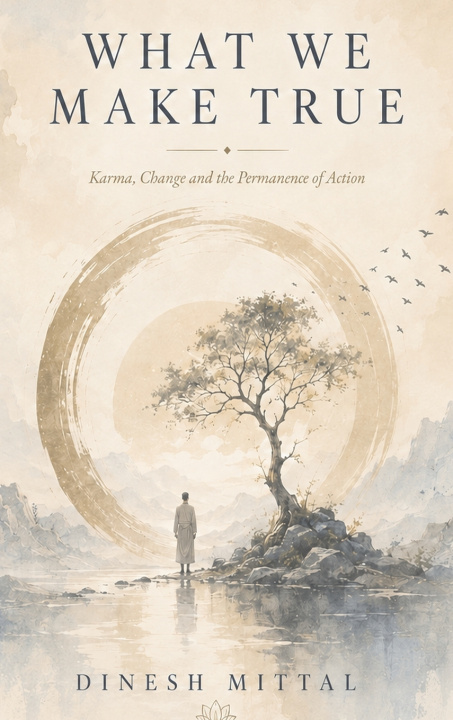
What cannot be undone?
The body changes. Relationships change. Civilisations vanish. Yet once an action has occurred, no passage of time can make it true that it never happened.
What We Make True begins with a simple but demanding proposition: truth does not change merely because time has passed. From that starting point, Dinesh Mittal develops the idea of the permanence of occurrence: an event may end, but its having happened is immune to reversal. A deed moves from possibility into fact. The actor may change, consequences may be repaired, memories may fade, and forgiveness may transform what comes next, but the past cannot be made not to have been.
Mittal distinguishes this permanence from mere duration. A mountain may endure for ages and still disappear. A gesture may last half a second and yet remain forever part of what occurred. That distinction opens a fresh philosophical approach to action, responsibility and karma.
Reading across Hindu, Buddhist and Jain philosophy, the book places this claim in conversation with ancient reflections on permanence, self, causation, karma and change. It does not force these traditions into agreement. Instead, their differences sharpen the question. The argument is then tested against grief, guilt, love, justice, repentance, forgiveness and moral hope.
The result is neither fatalism nor consolation. A wrong cannot be erased, but the wrongdoer can change. Forgiveness does not make the wound unreal; it creates a future not wholly governed by the wound. Redemption adds to reality rather than deleting the past. The past is closed as fact, while the future remains open to action.
Written for serious general readers and philosophically curious readers across traditions, What We Make True asks what it means for temporary beings to create truths that time cannot undo, and what that irreversibility asks of us before the next deed.


Informații despre carte
engleză
Categorii
