
 Contact
 Cum să cumpăr
Livrare
Consilier de cumpărături
Virgin Soil
 engleză
 40 b
40 b
 Nou
Nou
Până la 30 de zile pentru returnare

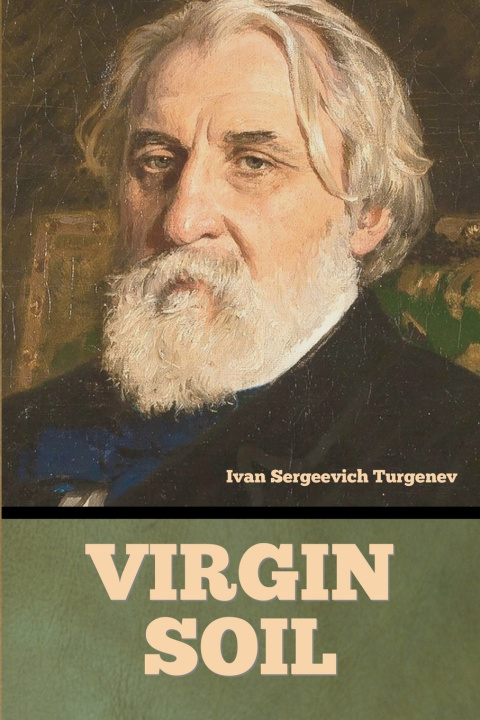
Virgin Soil by Ivan Sergeevich Turgenev is a novel that explores the social and political changes taking place in Russia during the 19th century. The story follows young idealists who believe they can transform society by spreading revolutionary ideas among the common people. Through characters such as Nezhdanov, Marianna, and Solomin, Turgenev presents the hopes, struggles, and disappointments of people who want to bring about social reform. The title Virgin Soil symbolizes untouched land, representing both the Russian countryside and the challenge of awakening the people to new ideas.
One of the novel's main themes is the conflict between idealism and reality. The young revolutionaries are passionate and determined, but they soon discover that changing society is far more difficult than they expected. Turgenev portrays the emotional and moral struggles of his characters with sympathy, showing that good intentions alone are not enough to overcome deep-rooted social problems. The novel also examines issues such as class differences, political commitment, love, and personal sacrifice.
Virgin Soil is considered one of Turgenev's most important later works because it provides a thoughtful picture of Russia during a time of political unrest. Rather than promoting a particular ideology, Turgenev encourages readers to think critically about the challenges of social change and the responsibilities of those seeking reform. His balanced portrayal of different viewpoints, combined with rich character development and realistic storytelling, makes the novel a valuable work of Russian literature that continues to be studied today.
About the Author
Ivan Sergeevich Turgenev (1818-1883) was a major figure in 19th-century Russian literature, known for his refined prose style and insightful portrayals of social change. Born into a wealthy landowning family in Oryol, Turgenev received a privileged education that included studies in Moscow, St. Petersburg, and Berlin. His early exposure to Western European philosophy and literature deeply influenced his worldview, helping shape his later role as a cultural bridge between Russia and Europe.
Turgenev gained prominence with works that explored the tensions within Russian society, especially between generations and ideological movements. His most famous novel, Fathers and Sons (1862), introduced the character Bazarov, often considered one of literature's first nihilists. Through such works, Turgenev examined themes like reform, tradition, love, and the changing social order, often portraying the struggles of individuals caught between old aristocratic values and emerging modern ideas. His writing is noted for its psychological depth, subtle humor, and lyrical depiction of the Russian countryside.
Although celebrated in Russia, Turgenev spent much of his later life abroad, particularly in France and Germany, where he associated with prominent European writers like Gustave Flaubert and Henry James. He played a key role in introducing Russian literature to Western audiences, influencing perceptions of Russian culture across Europe. Despite occasional criticism from Russian contemporaries who found him too Westernized, Turgenev remains a central figure in world literature, admired for his elegance, empathy, and nuanced exploration of human relationships.


Informații despre carte
engleză

Dăruiește această carte chiar astăzi
Este foarte ușor
1 Adaugă cartea în coș și selectează Livrează ca un cadou 2 Îți vom trimite un voucher în schimb 3 Cartea va ajunge direct la adresa destinataruluiBună ziua! Sunt Libroamiko, consilierul dumneavoastră de cărți.
Cu ce vă pot ajuta?