
 Contact
 Cum să cumpăr
Livrare
Consilier de cumpărături
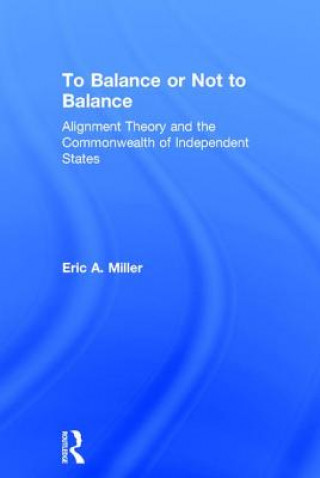
To Balance or Not to Balance
 engleză
 187 b
187 b
Până la 30 de zile pentru returnare
Clienții au cumpărat de asemenea








With the collapse of the Soviet Union in 1991, fifteen newly independent states emerged from the imperial wreckage, some more ready than others to grasp their new found independence. This book tackles the seminal question related to these broader developments: Why did some states choose to align with Russia, despite Moscow's overwhelming power advantage and recurrent neoimperial ambitions? To answer this question, Eric A. Miller develops and tests a theoretical framework that extends traditional realist alignment theories to include domestic level political and economic variables critical to the study of the Commonwealth of Independent States (CIS). Specifically, Miller argues that internal political threats to CIS leaders and the extent of a country's economic dependence on Russia were the most influential factors in determining alignments. The book is designed to meet the need for a thorough theoretical and scholarly assessment of the international and domestic politics of CIS countries. Spanning the traditional boundaries of political science, international relations, comparative politics, international political economy, and policy studies, the book is intended for scholars of post-Soviet studies, international relations theory, and security studies.


Informații despre carte
engleză

Dăruiește această carte chiar astăzi
Este foarte ușor
1 Adaugă cartea în coș și selectează Livrează ca un cadou 2 Îți vom trimite un voucher în schimb 3 Cartea va ajunge direct la adresa destinataruluiAr putea de asemenea, să te intereseze




 /
/
 Carte broșată
 570.14
lei
570.14
lei






 /
Carte broșată
110.93
lei
/
Carte broșată
110.93
lei
Bună ziua! Sunt Libroamiko, consilierul dumneavoastră de cărți.
Cu ce vă pot ajuta?