
 Contact
 Cum să cumpăr

Livrare
Consilier de cumpărături
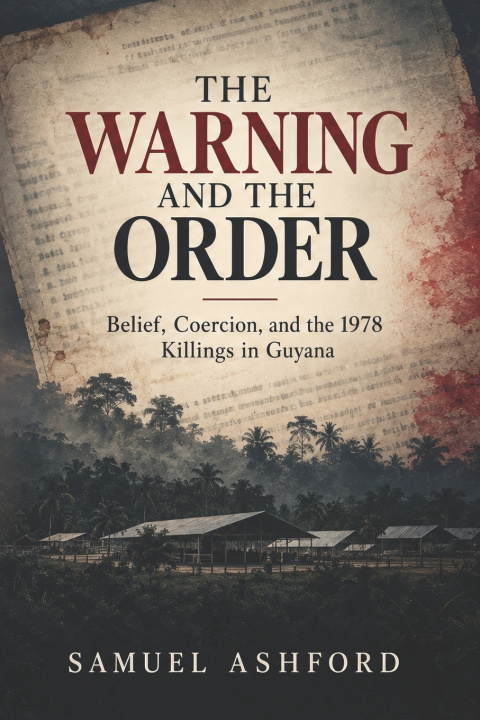
THE WARNING AND THE ORDER
Peoples Temple, Sacred Trust, and the 1978 Guyana Jonestown Killings
 engleză
 39 b
 Curând
 Nou
Până la 30 de zile pentru returnare

The warning came months before the killings. What happened after it reached the authorities?
In November 1978, 918 people died in Guyana in events linked to Peoples Temple-909 at Jonestown, five at the Port Kaituma airstrip, and four in Georgetown. The catastrophe is familiar by name. The path to it, and the lives of those caught within it, demand closer examination.
The Warning and the Order is an investigative work of historical true crime exploring how Jim Jones's religious community grew from a racially integrated Indianapolis congregation into a far-reaching organization in California and an isolated settlement in Guyana. Members worked for racial equality, mutual care, and a different kind of society. Those commitments were real; so were the questions raised about leadership, control, and members' freedom to disagree or leave.
This account reconstructs the warnings that preceded November 18. It follows former member Deborah Layton Blakey's sworn statements, the efforts of Concerned Relatives, the contested custody of John Victor Stoen, and official responses to allegations of coercion and planned collective death. Rather than treating every statement as established fact, the book asks what officials were told, what they could verify, and which limits shaped their actions.
The narrative then follows Congressman Leo Ryan's visit, the residents who asked to depart, the violence at Port Kaituma, and the recorded discussion at the Jonestown pavilion where Christine Miller questioned Jones. These sources illuminate choices and constraints, but they cannot speak for every person who died. Children and other victims are not reduced to a single story of willing obedience.
The investigation continues beyond the final day to the recovery of the dead, government and congressional inquiries, the surviving audio and documentary evidence, and the legal proceedings that followed. Accounts from survivors and former members preserve experiences that an official death total alone cannot explain.
Grounded in historical documents and testimony, this book distinguishes allegation from corroboration, recorded speech from unseen action, and legal judgment from wider historical responsibility. Its appendices provide a chronology, an account of people and institutions, an examination of evidence and interpretation, and a guide to religious and historical terminology.
Read this history to examine the human commitments that made Peoples Temple possible, the authority that grew around those commitments, and the warnings that raised the question of whether its members remained free to refuse.


Informații despre carte
engleză

Dăruiește această carte chiar astăzi
Este foarte ușor
1 Adaugă cartea în coș și selectează Livrează ca un cadou 2 Îți vom trimite un voucher în schimb 3 Cartea va ajunge direct la adresa destinataruluiBună ziua! Sunt Libroamiko, consilierul dumneavoastră de cărți.
Cu ce vă pot ajuta?