
 Contact
 Cum să cumpăr

Livrare
Consilier de cumpărături
 engleză
 36 b
 Nou
Până la 30 de zile pentru returnare

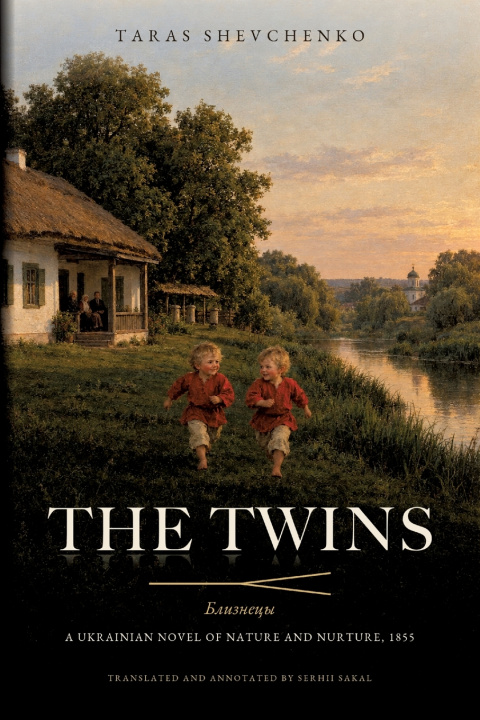
One Tuesday morning an old couple find a grey peasant coat stirring beside their porch. Inside it are two newborn boys. The day before, a cavalry regiment marched out of the little town of Pereiaslav. The day after, word comes of a woman's body found in the river near the farm.
Nikifor Sokira, an old Cossack officer, and his wife Praskovya have lived many years together without a child, and had stopped hoping for one. They take the boys in and christen them Zosim and Savvaty, after the saints whose day falls next - the patrons of beekeeping, and Nikifor keeps bees.
The twins grow up as like each other as two cherries. In time the old people settle that one shall be an officer and the other a seminarist, and cast lots for which is which. Zosim goes to the cadet corps at Poltava, Savvaty to the gymnasium. The poet Kotlyarevsky, who is the gymnasium's trustee, writes to the farm that he can tell them apart only by their uniforms, and that their different upbringing will make "a psychological experiment".
Four years later their letters come home together. One asks for as much money as can be sent, for unforeseen expenses, and is signed "Z. Sokirin". The other is long, and signed "S. Sokira".
"Sokirin, Sokirin," says the old man quietly. "A bad sign."
Two boys born alike, brought up by two roads. The novella is about what each of them becomes.
The man who wrote it
Taras Shevchenko (1814-1861), the poet of Kobzar, was born a serf and bought out of serfdom at twenty-four, with the money raised by a lottery for a portrait painted by Karl Bryullov. In 1847 he was arrested and sent to the Orenburg Corps as a private soldier, under an order that he was not to write and not to draw. He wrote this novella in Russian in the summer of 1855, at the Novopetrovsk fort on the Caspian, and it was not printed until 1886, twenty-five years after his death.
What is in this edition
- The whole novella, unabridged, in a new English translation, made from the 2003 scholarly text
- An introduction to the book, its narrator and where it was written
- 335 notes at the foot of the page - no note sends you to the back of the book
- 33 essays at the back, following the story in order, for after you have finished
- A list of the people of the book, a note on pronunciation, notes on the edition and the translation, and a chronology of Shevchenko's life
Translated from the Russian text established for the 2003 Kyiv edition of Shevchenko's collected works, which a note at the front of the book describes in full.


Informații despre carte
engleză

Dăruiește această carte chiar astăzi
Este foarte ușor
1 Adaugă cartea în coș și selectează Livrează ca un cadou 2 Îți vom trimite un voucher în schimb 3 Cartea va ajunge direct la adresa destinataruluiBună ziua! Sunt Libroamiko, consilierul dumneavoastră de cărți.
Cu ce vă pot ajuta?