
 Contact
 Cum să cumpăr

Livrare
Consilier de cumpărături
 engleză
 57 b
 Curând
 Nou
Până la 30 de zile pentru returnare

You are living inside systems. The question is whether you understand them.
Behind every family, workplace, and institution is a structure most people never see. It decides who gets heard, how choices are made, and why some efforts thrive while others stall. Most of us spend our lives reacting to these systems without ever learning how they work.
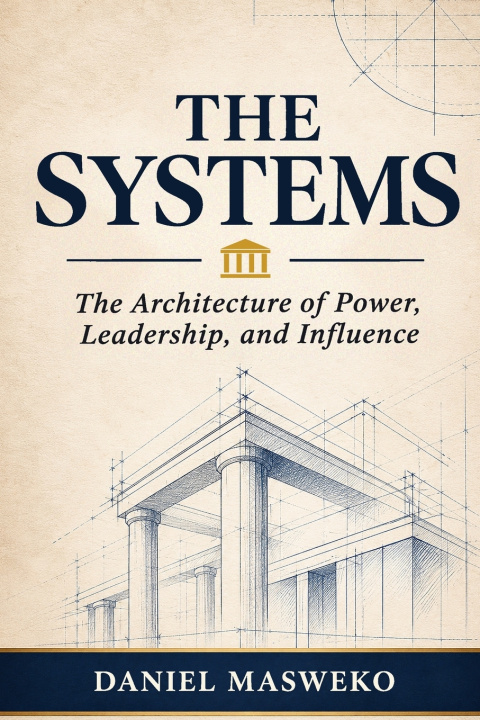
THE SYSTEMS: The Architecture of Power, Leadership, and Influence pulls back the curtain. Across six parts and thirty chapters, Daniel Masweko guides you through a clear, practical framework for seeing, understanding, and shaping the systems around you.
Inside this book, you will learn:
- Why authority is given, but leadership is earned
- How information, access, and trust quietly move power
- Why changing the incentives changes the behaviour
- How to read the real structure behind titles and appearances
- How to lead people, navigate resistance, and transform systems that no longer work
- How to build structures that outlast their founder
This book makes complex ideas easy to apply at work, in your community, or at home. It is not a guide to control or manipulation. It is a call to responsible influence: to create capability, accountability, and meaningful progress in the places you lead.
The closing chapters and the System Architect's Operating Framework give you a practical tool to apply what you've learned and become the architect of your own system, not just a participant in someone else's.
This book is for you if you are:
- A leader, manager, or entrepreneur who wants to build something that lasts
- A professional trying to understand how power really works in your organisation
- A student of leadership, society, or human behaviour
- Anyone who wants to look beyond titles and appearances
You cannot change a system you do not understand. Start here.
Daniel Masweko is the author of Mindset of a Champion, Beyond the Salary, Praying While Holding On, Create Your Own Opportunity, and The Secret Self. His writing explores personal development, opportunity, discipline, and human behaviour.


Informații despre carte
engleză

Dăruiește această carte chiar astăzi
Este foarte ușor
1 Adaugă cartea în coș și selectează Livrează ca un cadou 2 Îți vom trimite un voucher în schimb 3 Cartea va ajunge direct la adresa destinataruluiBună ziua! Sunt Libroamiko, consilierul dumneavoastră de cărți.
Cu ce vă pot ajuta?