
 Contact
 Cum să cumpăr

Livrare
Consilier de cumpărături
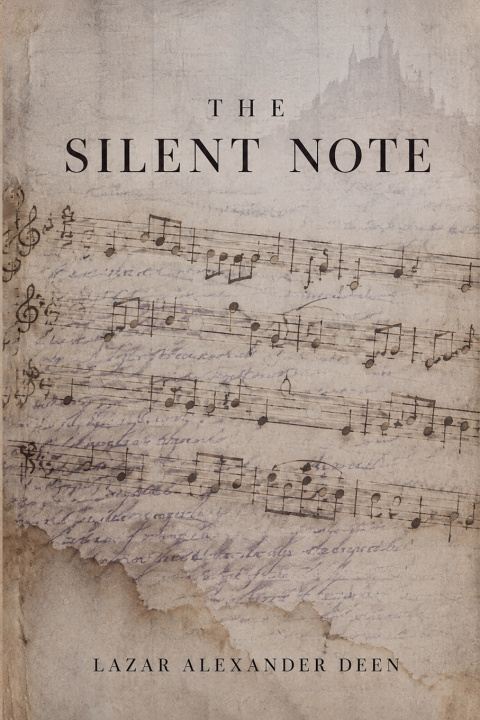
The Silent Note
 engleză
 50 b
 Nou
Până la 30 de zile pentru returnare

Every line he crossed, he measured first.
Viktor Aleksić is thirty-two, Serbian, and a conservation scientist - the person a heritage project calls when it needs to know what a four-hundred-year-old building is actually made of. He is rigorous, precise and widely respected. Since the end of the only relationship that ever mattered to him, he has also been entirely absent from his own life: functioning on the surface, hollow underneath, able to tell you the exact colour of wet stone on a Brno street in October and unable to tell you why it should matter.
He took the Brno fellowship for reasons he has never written down.
Veveří Castle has been standing above the Svratka since the thirteenth century, and it has been a stronghold, a prison, a Wehrmacht requisition and a ruin. When restoration work opens a sealed cavity in the north-west wing, the contents are catalogued with professional boredom: alchemical apparatus, blank parchment, a coded document that excites every historian who sees it, and six sheets of household music that nobody looks at twice.
The cipher goes to the cryptographers. The parchment goes for imaging. Viktor is handed the music, alone at a bench one November night - and running an ordinary chemical treatment on an ordinary object, he raises a second layer of writing out of the paper. A procedure, in a private hand, that nobody has read since 1609.
It makes no gold. It never did, and the men who died believing otherwise were looking at lead the whole time.
What it does is take the restraint off a person for a few hours, so that whatever is loudest inside them comes out whole - and they remember every second of it afterwards, in perfect detail, and cannot account for any of it.
Four hundred years ago a court in Prague was full of men who knew this. Rudolf II kept the greatest collection in Europe and the finest alchemists money could buy, and spent the last years of his reign in documented melancholy, suspicion and withdrawal, and nobody has ever satisfactorily explained why. At Český Krumlov his illegitimate son deteriorated for years under the care of physicians who had run out of treatments, until a girl was dead and the arithmetic would never come out. The man who wrote these six sheets was there for all of it. He put his pages down over a question he could not answer, and he never picked them up again.
Viktor reads his notes and thinks: insufficient rigour.
Because Viktor needs to know whether there is anything left inside himself, and there is no way to find that out from the inside.
So he starts with other people.
This is not a thriller. Nobody is pursuing him, nothing is at stake but a man's soul, and that turns out to be enough. He is careful. He keeps meticulous records. He states every objection in full and answers it honestly in his own notebook before he crosses a single line - and that is exactly what makes him dangerous, because his defence is mechanically airtight. He puts nothing into anybody. Everything that comes out was already there. He only removes a lid.
It is true. That is what makes it monstrous.
Across one Czech academic year - in departmental kitchens and archive reading rooms, through winter light and bad coffee, an Austrian with inherited money and an Italian from the Vatican archive both digging in the wrong place entirely - a meticulous man builds an entirely rational case for doing something unforgivable to people who trust him.
And sooner or later a man like that drinks it himself.


Informații despre carte
engleză

Dăruiește această carte chiar astăzi
Este foarte ușor
1 Adaugă cartea în coș și selectează Livrează ca un cadou 2 Îți vom trimite un voucher în schimb 3 Cartea va ajunge direct la adresa destinataruluiBună ziua! Sunt Libroamiko, consilierul dumneavoastră de cărți.
Cu ce vă pot ajuta?