
 Contact
 Cum să cumpăr
Livrare
Consilier de cumpărături
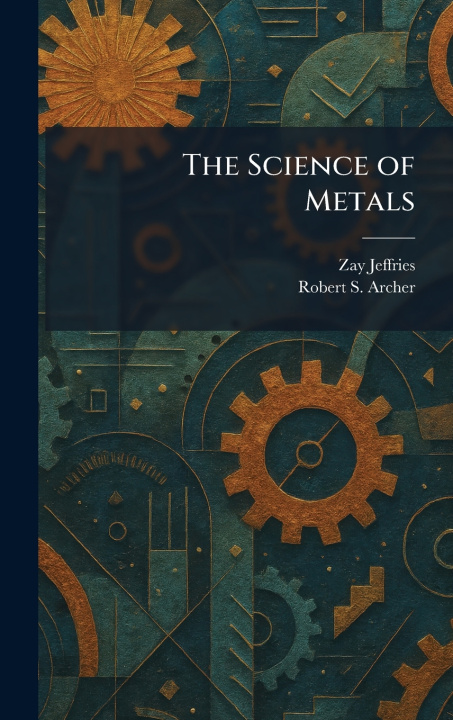
The Science of Metals
 engleză
 99 b
99 b
Până la 30 de zile pentru returnare

"The Science of Metals" is a seminal work in the field of metallurgy, providing a comprehensive and systematic foundation for understanding the physical and chemical properties of metallic materials. Written by esteemed experts Zay Jeffries and Robert S. Archer, this volume bridges the gap between traditional metalworking practices and the modern scientific approach to materials engineering.
The text delves into the fundamental principles governing the behavior of metals, focusing on their crystalline structure, the mechanics of deformation, and the complex nature of alloy systems. By exploring the relationship between internal structure and external properties, the authors offer critical insights into why metals behave as they do under various conditions. Key topics include the constitution of alloys, the effects of temperature and mechanical treatment, and the development of high-performance materials for industrial applications.
Designed for both students and professional engineers, "The Science of Metals" remains a vital reference for anyone interested in the evolution of materials science. It serves as an essential guide to the theoretical underpinnings of metallurgy, emphasizing the rigorous scientific methods that transformed the industry in the early twentieth century. This work is a testament to the pioneering research that continues to inform modern metallurgical practices and remains a cornerstone of technical literature.
This work has been selected by scholars as being culturally important, and is part of the knowledge base of civilization as we know it. This work was reproduced from the original artifact, and remains as true to the original work as possible. Therefore, you may see the original copyright references, library stamps (as most of these works have been housed in our most important libraries around the world), and other notations in the work.
This work is in the public domain in the United States of America, and possibly other nations. Within the United States, you may freely copy and distribute this work, as no entity (individual or corporate) has a copyright on the body of the work.
As a reproduction of a historical artifact, this work may contain missing or blurred pages, poor pictures, errant marks, etc. Scholars believe, and we concur, that this work is important enough to be preserved, reproduced, and made generally available to the public. We appreciate your support of the preservation process, and thank you for being an important part of keeping this knowledge alive and relevant.


Informații despre carte
engleză
Categorii
