
 Contact
 Cum să cumpăr
Livrare
Consilier de cumpărături
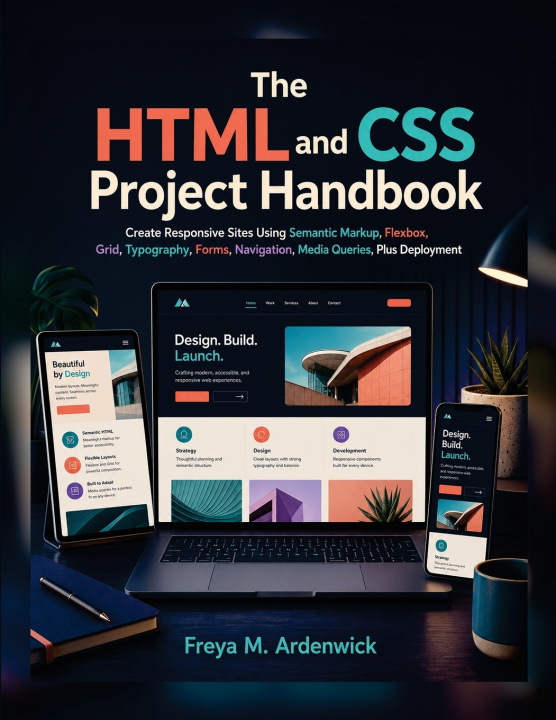
The HTML and CSS Project Handbook
Create Responsive Sites Using Semantic Markup, Flexbox, Grid, Typography, Forms, Navigation, Media Queries, Plus Deployment
 engleză
 46 b
46 b
 Curând
 Nou
Nou
Până la 30 de zile pentru returnare

A finished website asks more of you than knowing what a tag does. You have to make structure, spacing, navigation, content, forms, and changing screen sizes work together.
That is where The HTML and CSS Project Handbook puts its attention.
Instead of leaving important concepts scattered across isolated examples, this practical guide shows how the pieces of modern page building connect. You move from purposeful markup to layouts that hold together, typography that supports the page rather than fighting it, navigation people can actually use, forms that belong naturally in the design, and responsive behavior that adapts when the available screen changes.
The emphasis throughout is on creating.
You will work with semantic page structure, flexible layouts, two-dimensional page arrangements, readable type systems, menus, form controls, responsive media and breakpoint decisions-then carry that work through the final steps required to get a finished site out of the editor and into use.
Along the way, you will learn how to:
• organize content with meaningful page structure instead of relying on arbitrary containers
• choose the right layout approach for rows, columns and more complex arrangements
• keep spacing, sizing and alignment predictable as a design grows
• build navigation that remains usable when the viewport becomes smaller
• make forms look intentional while preserving clear interaction
• combine typography and visual hierarchy for pages that are easier to scan
• decide where responsive changes are actually needed instead of collecting unnecessary breakpoints
• prepare completed work for deployment rather than ending every exercise on your local machine
Because the book is produced in full color, code, visual relationships, layout decisions and finished-page examples can be followed with greater clarity as concepts move from markup to browser result.
This is a project-centered route for readers who want their practice to lead somewhere tangible: pages they can inspect, improve, resize, test and eventually publish.
Stop collecting disconnected snippets. Build the page, make it adapt, solve the rough edges, and take your next site all the way from blank file to working browser experience.


Informații despre carte
engleză
