
 Contact
 Cum să cumpăr
Livrare
Consilier de cumpărături
 engleză
 26 b
26 b
 Curând
 Nou
Nou
Până la 30 de zile pentru returnare

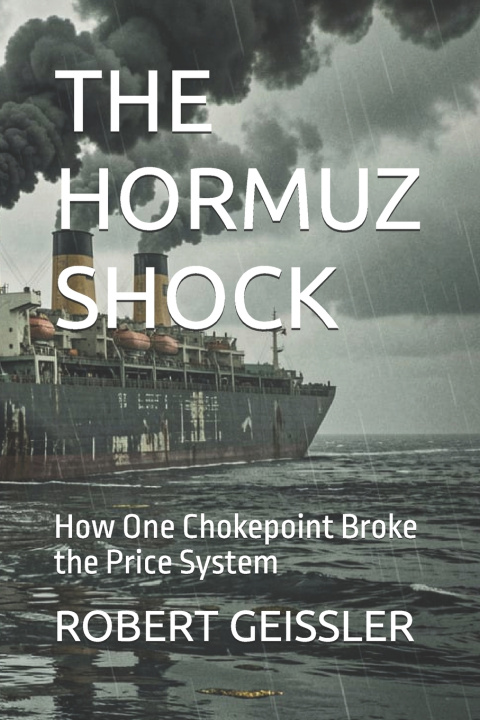
In July 2026, the IMF quietly published one of the starkest numbers of the decade: growth across the Middle East and Central Asia collapsing from 3.7 percent to just 0.7 percent - a downgrade tied directly to a closed shipping lane most people can't find on a map.
Then the headlines got it wrong. That collapse wasn't global. Global growth barely moved. The world's aggregate numbers looked calm, even as an entire region's economy buckled.
How can both be true at once?
In The Hormuz Shock, Robert F. Geissler - author of The Family Fight - traces the answer through the Strait of Hormuz, the narrow waterway carrying a fifth of the world's oil, and the renewed U.S.-Iran conflict that shut it down longer than anyone expected. Applying the same Austrian-school lens he brought to the Federal Reserve in his previous book - Hayek's knowledge problem, Cantillon's uneven distribution of shocks - Geissler shows how a single chokepoint can distort prices, wreck a region's fiscal plans, and mask its own damage inside a global statistic that never blinks.
Saudi Arabia's diversification strategy complicated by its own inability to export. Iran's growth rising even as its isolation deepens. A technology boom in Asia quietly offsetting a war half a world away. And a global inflation number the aggregate growth figure never warned you about.
A sharp, tightly sourced look at what happens when the price system tries to talk - and almost nobody is listening in the right place.


Informații despre carte
engleză

Dăruiește această carte chiar astăzi
Este foarte ușor
1 Adaugă cartea în coș și selectează Livrează ca un cadou 2 Îți vom trimite un voucher în schimb 3 Cartea va ajunge direct la adresa destinataruluiBună ziua! Sunt Libroamiko, consilierul dumneavoastră de cărți.
Cu ce vă pot ajuta?