
 Contact
 Cum să cumpăr
Livrare
Consilier de cumpărături
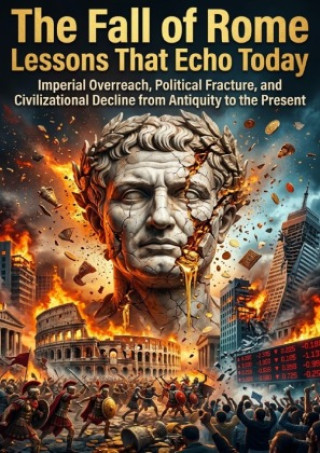
The Fall of Rome: Lessons That Echo Today
Imperial Overreach, Political Fracture, and Civilizational Decline from Antiquity to the Present.DE
 engleză
 60 b
60 b
Până la 30 de zile pentru returnare
Clienții au cumpărat de asemenea



 /
/
 Carte broșată
 95.72
lei
95.72
lei




For centuries, historians have debated why Rome fell - and the question has never stopped feeling urgent. The Western Roman Empire's collapse in 476 CE was not a single catastrophic moment but a prolonged unraveling: military overextension, fiscal crisis, political fragmentation, institutional corruption, and the gradual erosion of civic identity across a population that had once shared a common imperial project.This book reconstructs Rome's decline through primary sources, archaeological evidence, and four decades of revisionist scholarship - tracing the internal pressures and external forces that combined to dissolve the most durable administrative structure the ancient world produced. It examines the roles of economic inequality, currency debasement, barbarian integration, religious transformation, and the progressive weakening of senatorial and military institutions.But this is also a book about pattern recognition. Without drawing false equivalences, it invites readers to examine the structural parallels that serious historians have identified between late imperial Rome and modern democratic societies - overextended military commitments, polarized political elites, weakening institutional trust, and the difficulty of maintaining complex systems under compounding stress.The goal is neither alarmism nor reassurance, but historical literacy: understanding how a civilization of Rome's sophistication and durability could nevertheless reach a point of irreversible fragmentation, and what that process looked like from the inside.


Informații despre carte
engleză

Dăruiește această carte chiar astăzi
Este foarte ușor
1 Adaugă cartea în coș și selectează Livrează ca un cadou 2 Îți vom trimite un voucher în schimb 3 Cartea va ajunge direct la adresa destinataruluiAr putea de asemenea, să te intereseze













Bună ziua! Sunt Libroamiko, consilierul dumneavoastră de cărți.
Cu ce vă pot ajuta?