
 Contact
 Cum să cumpăr

Livrare
Consilier de cumpărături
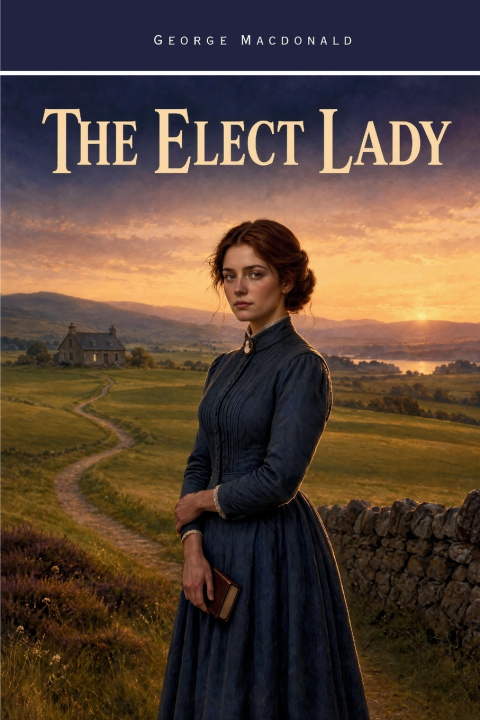
The Elect Lady
A Classic Tale of Love, Wisdom, and the Journey Toward Truth
 engleză
 34 b
 Nou
Până la 30 de zile pentru returnare

What defines a truly noble life? Is it education, social standing, religious devotion, or something deeper-something revealed only through the way we love, choose, and treat those around us?
In The Elect Lady, George MacDonald turns these questions into an intimate and thoughtful Victorian novel set amid the fields, farms, and quiet communities of rural Scotland. Here, outward appearances often conceal complicated inner lives, and the distance between what people seem to be and what they truly are becomes a source of both conflict and discovery.
MacDonald brings together characters shaped by different circumstances, expectations, and ideas about the world. Their relationships unfold against a society conscious of class and reputation, where education can open doors, social position can influence judgment, and personal worth is too easily measured by external standards. Yet beneath these distinctions lies a more difficult question: what qualities actually make one person worthy of another's trust, admiration, or love?
The novel finds much of its power in this contrast between the visible and the unseen. Intellectual achievement does not necessarily produce wisdom. Respectability does not guarantee goodness. Strong emotion is not always the same as selfless affection. MacDonald continually looks beneath the surface, examining the motives that shape human behavior and the subtle ways pride, ambition, sincerity, and compassion influence relationships.
The Scottish countryside provides an evocative setting for these concerns. Rural labor, changing weather, open fields, old homes, and the rhythms of ordinary life give the story a grounded atmosphere that complements its philosophical depth. MacDonald treats the natural world with characteristic sensitivity, allowing landscape to become part of the novel's contemplative mood without overwhelming the human drama at its center.
Faith is equally important, but The Elect Lady approaches spirituality through character rather than simple instruction. MacDonald was deeply interested in the difference between professing a belief and allowing it to shape everyday conduct. His characters encounter questions of conscience that cannot be answered merely by reputation or convention. Integrity must be lived, humility must be learned, and genuine care for another person requires more than words.
The result is a novel in which romance, spirituality, social observation, and moral inquiry are closely intertwined. Rather than presenting love as a purely sentimental experience, MacDonald explores its demands. Genuine love requires honesty and freedom from possessiveness; it challenges pride and asks individuals to recognize worth beyond their own expectations.
This emphasis on inward transformation is characteristic of the author whose imaginative vision would later be admired by generations of readers and writers. Although George MacDonald is widely celebrated for his fantasy and fairy tales, his realistic novels reveal the same fascination with hidden realities. Here there are no enchanted kingdoms or magical creatures. Instead, the mystery lies within human nature itself.
Written with warmth, seriousness, and an abiding belief in the possibility of growth, The Elect Lady offers a distinctive example of MacDonald's mature moral imagination. Its characters inhabit a world recognizably Victorian, yet the questions they confront remain strikingly familiar: How accurately do we judge others? How well do we understand our own motives? Can knowledge exist without wisdom? And what must change within us before we can truly understand another person?
A quietly powerful classic about love, conscience, humility, and the search for a life grounded in truth.


Informații despre carte
engleză

Dăruiește această carte chiar astăzi
Este foarte ușor
1 Adaugă cartea în coș și selectează Livrează ca un cadou 2 Îți vom trimite un voucher în schimb 3 Cartea va ajunge direct la adresa destinataruluiBună ziua! Sunt Libroamiko, consilierul dumneavoastră de cărți.
Cu ce vă pot ajuta?