
 Contact
 Cum să cumpăr

Livrare
Consilier de cumpărături
 engleză
 53 b
 Curând
 Nou
Până la 30 de zile pentru returnare

Most people drive through Rossendale on their way to somewhere else. This book asks what they are missing, and why it matters.
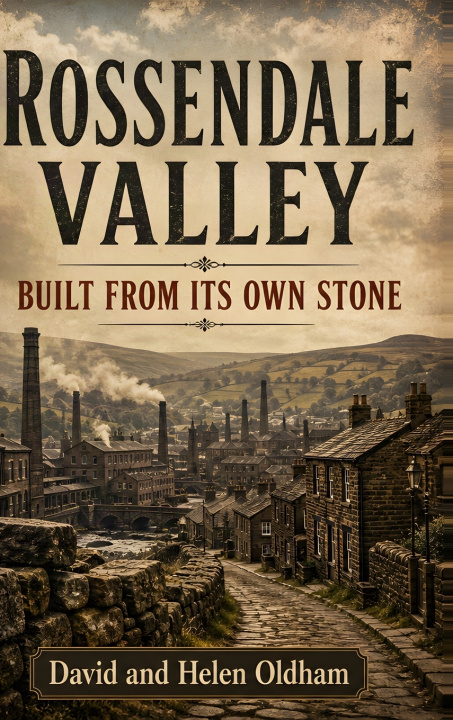
Rossendale Valley: Built from Its Own Stone is a narrative history of a Lancashire valley that clothed an empire and then quietly forgot that it had done so. Co-authored by Helen, who grew up hearing the looms, and David, who arrived from outside and could not quite believe what he found, it is a book about a place that shaped the modern world and was somehow left out of the story.
The valley announces itself without ceremony. The moors close in, the mill chimneys stand without their tops, and the river runs the colour of cold tea. David's first impression, recalled here with honesty, was bewilderment. Helen's was something harder to name, a love compounded from memory, grief, and stubborn local pride. Between those two responses, the book finds its shape.
The story begins long before the mills. The Broadclough Dykes above Bacup may mark the edge of a battlefield from 937 AD. The vaccary keepers of the medieval forest, Henry of the Estock, John of Pycoppe, left only their names in parish records, yet those names survive in the landscape still. In 1507, a royal decree of disafforestation set in motion a transformation that would take four centuries to complete. By the Victorian period, Rossendale was producing slippers for the world, its slipper trade growing from leftover felt cut in one man's kitchen in 1874 into an industry employing sixty thousand people and reaching every corner of the Empire.
That wealth is still visible if you know where to look, in the datestones carved into millstone grit, in the chapels built larger than any congregation strictly needed, in the surnames that outlasted the industries and the families who bore them. What is harder to see is how a valley so central to British industrial history came to sit so far outside the national memory of it.
Written from the critical distance of France, drawing on census returns, council archives, parish records, and personal recollection, Rossendale Valley: Built from Its Own Stone combines the intimacy of memoir with the rigour of regional history. It does not sentimentalise its subject. The poverty was real, the decline was real, and the book does not flinch from either. But it makes the case, with warmth and precision, that Rossendale is one of the most historically significant overlooked places in England, and that overlooked is not the same as unimportant.
For readers who respond to close, careful writing about specific English landscapes and the communities shaped by them. For anyone with roots in East Lancashire or the wider post-industrial north. For local historians, genealogists, and heritage enthusiasts who want the deeper story behind the datestones and the dry-stone walls. And for general readers of narrative non-fiction who believe that the places most people drive through deserve the same attention as the ones they stop for.
A book for readers who love narrative non-fiction rooted in place, written with the authority of lived experience and the curiosity of the newcomer who still cannot quite believe what he found.


Informații despre carte
engleză
Categorii

Dăruiește această carte chiar astăzi
Este foarte ușor
1 Adaugă cartea în coș și selectează Livrează ca un cadou 2 Îți vom trimite un voucher în schimb 3 Cartea va ajunge direct la adresa destinataruluiBună ziua! Sunt Libroamiko, consilierul dumneavoastră de cărți.
Cu ce vă pot ajuta?