
 Contact
 Cum să cumpăr
Livrare
Consilier de cumpărături
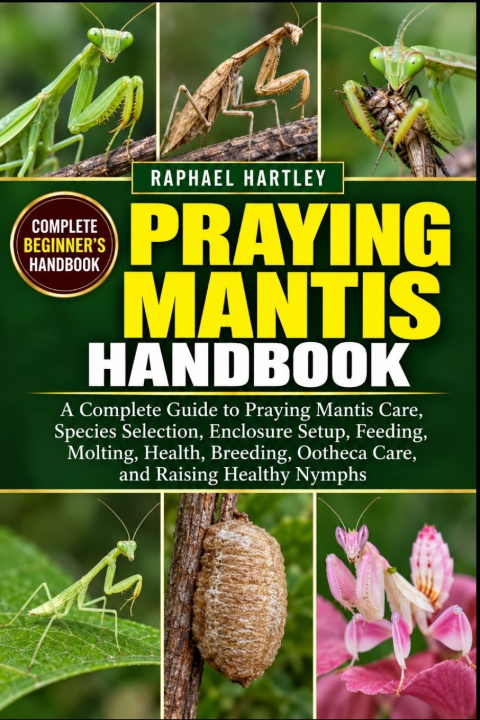
PRAYING MANTIS HANDBOOK
A Complete Guide to Praying Mantis Care, Species Selection, Enclosure Setup, Feeding, Molting, Health, Breeding, Ootheca Care, and Raising Healthy Nymphs
 engleză
 39 b
39 b
 Curând
 Nou
Nou
Până la 30 de zile pentru returnare

Discover the fascinating world of praying mantises and learn how to provide appropriate care from selecting the right species and designing an enclosure to feeding, molting, breeding, ootheca management, and raising healthy nymphs.
PRAYING MANTIS HANDBOOK is a complete practical guide for beginners, experienced invertebrate keepers, breeders, educators, and anyone fascinated by these remarkable predatory insects. Raphael Hartley combines essential biology with practical husbandry principles to help readers understand mantis behavior, prevent common mistakes, and manage every important stage of the life cycle.
Praying mantises are extraordinary hunters with specialized feeding behaviors, impressive camouflage, complex molting requirements, and species-specific environmental needs. Successful keeping depends on understanding these characteristics rather than treating every mantis species the same.
Inside this handbook, you'll discover:
• Praying mantis anatomy, natural history, behavior, life cycle, and adaptations
• How to research and select species appropriate for your experience and available resources
• What to look for when obtaining a healthy mantis from a responsible source
• Enclosure size, ventilation, climbing surfaces, décor, and secure setup principles
• Creating suitable temperature and humidity conditions for different species
• Lighting, misting, hydration, airflow, and environmental monitoring
• Choosing appropriately sized live prey and establishing practical feeding routines
• Understanding appetite changes and avoiding overfeeding or unsuitable prey
• Safe handling principles and minimizing unnecessary stress or injury
• Recognizing hunting, defensive, resting, grooming, and reproductive behaviors
• Understanding the molting cycle and why adequate vertical space is essential
• Preparing for molts and recognizing common signs of an approaching shed
• Preventing falls, incomplete molts, dehydration, and other molting complications
• Monitoring body condition, movement, appetite, limbs, eyes, abdomen, and general appearance
• Recognizing potential health problems and environmental warning signs
• Maintaining enclosure hygiene and reducing mold, mites, spoiled prey, and waste buildup
• Understanding sex differences, maturity, courtship, mating, and breeding preparation
• Managing breeding encounters carefully and reducing unnecessary risks
• Ootheca formation, identification, incubation, environmental management, and monitoring
• Preparing for hatching and managing large numbers of emerging nymphs
• Nymph housing, feeding, hydration, growth, separation, and reducing cannibalism
• Keeping records of molts, feeding, growth, breeding, ootheca production, and hatching
• Troubleshooting feeding refusal, poor molts, unsuitable humidity, escape risks, and breeding difficulties
• Responsible sourcing, breeding, rehoming, and disposal practices
PRAYING MANTIS HANDBOOK emphasizes that husbandry requirements vary significantly among species. Temperature, humidity, enclosure dimensions, ventilation, prey size, and reproductive management should always be based on the biology of the particular mantis being kept.
The guide also promotes responsible ownership. Keepers should understand local regulations, avoid collecting protected species, never release captive or non-native mantises into the environment, and plan suitable homes before producing large numbers of offspring.
Whether you are preparing for your first mantis, improving an existing enclosure, experiencing your first molt, planning a breeding project, or learning how to manage oothecae and nymphs, this handbook provides a dependable foundation.
Create better enclosures, feed appropriately, manage molts safely, raise healthier nymphs, and experience praying mantis keeping with greater knowledge, confide


Informații despre carte
engleză
Categorii

Dăruiește această carte chiar astăzi
Este foarte ușor
1 Adaugă cartea în coș și selectează Livrează ca un cadou 2 Îți vom trimite un voucher în schimb 3 Cartea va ajunge direct la adresa destinataruluiBună ziua! Sunt Libroamiko, consilierul dumneavoastră de cărți.
Cu ce vă pot ajuta?