
 Contact
 Cum să cumpăr
Livrare
Consilier de cumpărături
 engleză
 217 b
217 b
Până la 30 de zile pentru returnare
Clienții au cumpărat de asemenea

 /
/
 Carte broșată
 178.80
lei
178.80
lei



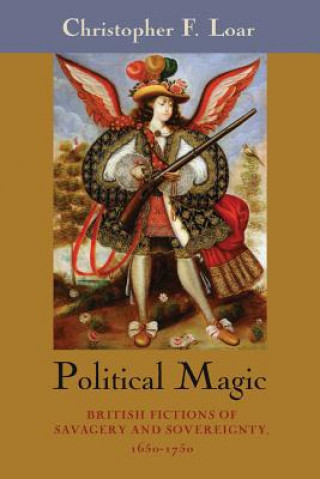
Political Magic examines British fictions of exploration and colonialism from 1650 to 1750, arguing that narratives of intercultural contact work to reimagine political categories such as sovereignty and popular power. These fictions refigure the commoner as a superstitious savage encountering Britons as civilizing sovereigns. Authors of these narratives use the colonial scene as a political allegory; just as the Hobbesian sovereign or Filmerian king is in some sense exterior to the legal order, so is the colonist exterior to the colonized: a giver of rules who remains unruly. These fictions reveal aspects of political thought in this period that official discourse typically shunted aside or handled differently -particularly the status of the common folk as political subjects, whose "liberty" was often proclaimed even as it was undermined both in theory and in practice. Political Magic traces fictional efforts to manage and reconcile these tensions. These texts repeatedly focalize moments of savage wonder, in which "uncivilized" people stand astonished when first witnessing European displays of technological prowess, particularly gunpowder. It suggests that this repeated motif - the "first gunshot topos" - performs important conceptual work on ideas of consent and political legitimacy. Wonder induces admiration, and admiration transforms the unruly savage into a docile subject. However, as manifestations of force held in abeyance, these technologies also signal the ultimate reliance of sovereigns on extreme violence as the less-than-mystical foundation of their authority - a violence that repeatedly surfaces in scenes of colonial massacre. By examining works by Margaret Cavendish, Daniel Defoe, Aphra Behn, Jonathan Swift, and Eliza Haywood in conjunction with contemporary political writing and travelogues, Political Magic locates a subterranean discourse of sovereignty in the century after Hobbes, finding surprising affinities between the government of "savages" and of Britons.


Informații despre carte
engleză
