
 Contact
 Cum să cumpăr

Livrare
Consilier de cumpărături
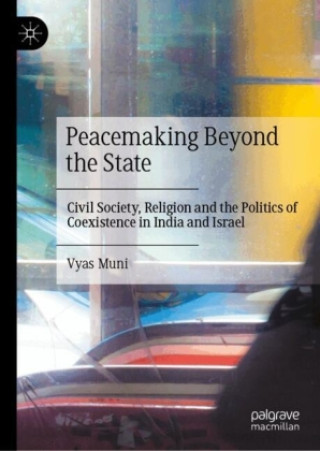
Peacemaking Beyond the State
Civil Society, Religion and the Politics of Coexistence in India and Israel.DE
 engleză
 414 b
 Curând
 Nou
 Ediția 20. 04. 2027
Până la 30 de zile pentru returnare

This book is written for scholars, graduate students, and researchers working in peace and conflict studies, comparative politics, political theory, South Asian studies, and Middle East studies. It is particularly suited for advanced university courses on peacebuilding, religion and politics, and citizenship in divided societies. The book examines how civil society actors-faith-based groups, grassroots initiatives, and human rights organizations-engage with religious conflict in India and Israel. It centers on three main ideas: the shortcomings of liberal, state-centered peace models; the politics of citizenship and belonging; and the significance of disputed sacred sites like Ayodhya, Gyanvapi, Al-Aqsa, and Hebron. These issues are important because in both India and Israel religion is not confined to the private sphere; it shapes national identity, legal frameworks, and everyday political life. The book addresses a central problem in peace studies: dominant liberal peace frameworks prioritize institutions, elections, and legal reforms while treating religion as secondary or destabilizing. This approach often fails to grasp how deeply religious identity is embedded in state formation and citizenship regimes. By examining civil society as a politically contested space-shaped by state regulation, shrinking civic freedoms, and ideological struggles-the book offers a more realistic understanding of how peace initiatives operate in religiously divided democracies


Informații despre carte
engleză

Dăruiește această carte chiar astăzi
Este foarte ușor
1 Adaugă cartea în coș și selectează Livrează ca un cadou 2 Îți vom trimite un voucher în schimb 3 Cartea va ajunge direct la adresa destinataruluiBună ziua! Sunt Libroamiko, consilierul dumneavoastră de cărți.
Cu ce vă pot ajuta?