
 Contact
 Cum să cumpăr
Livrare
Consilier de cumpărături
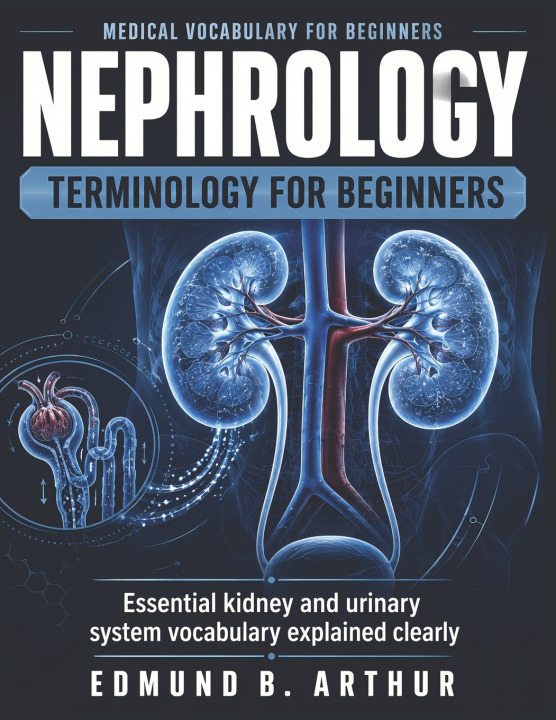
Nephrology Terminology for Beginners
Essential kidney and urinary system vocabulary explained clearly
 engleză
 138 b
138 b
 Nou
Nou
Până la 30 de zile pentru returnare

Kidney language should not stand between you and understanding your health or your studies.
Terms such as eGFR, proteinuria, creatinine clearance, and glomerulonephritis can make a lecture, laboratory report, or treatment discussion feel overwhelming.
Nephrology Terminology for Beginners turns complex kidney and urinary-system vocabulary into clear, memorable explanations. This practical reference explores the language of renal anatomy, filtration, fluid and electrolyte balance, kidney disorders, diagnostic tests, dialysis, transplantation, medications, and procedures.
Inside, you will explore:
- Kidney, nephron, bladder, ureter, and urinary-system anatomy
- GFR, creatinine, BUN, electrolytes, acid-base balance, and urine formation
- Acute kidney injury, chronic kidney disease, glomerular disorders, stones, infections, and inherited conditions
- Urinalysis, blood chemistry, imaging, kidney biopsy, and genetic testing
- Hemodialysis, peritoneal dialysis, transplant vocabulary, medications, and supportive care
- Pronunciation and word roots
- A concise definition and plain-English explanation
- Key points and a familiar everyday analogy
- Red flags and myth-versus-fact clarification
- Useful questions to discuss with a healthcare professional
Ideal for:
- Medical, nursing, laboratory science, and allied-health students
- Trainees building a practical foundation in renal vocabulary
- Patients and families trying to understand a diagnosis or laboratory report
- Curious readers interested in how the kidneys regulate the body
For educational and informational purposes only. This book is not a substitute for professional medical advice, diagnosis, or treatment.


Informații despre carte
engleză

Dăruiește această carte chiar astăzi
Este foarte ușor
1 Adaugă cartea în coș și selectează Livrează ca un cadou 2 Îți vom trimite un voucher în schimb 3 Cartea va ajunge direct la adresa destinataruluiBună ziua! Sunt Libroamiko, consilierul dumneavoastră de cărți.
Cu ce vă pot ajuta?