
 Contact
 Cum să cumpăr
Livrare
Consilier de cumpărături
 engleză
 73 b
73 b
 Curând
 Nou
Nou
Până la 30 de zile pentru returnare

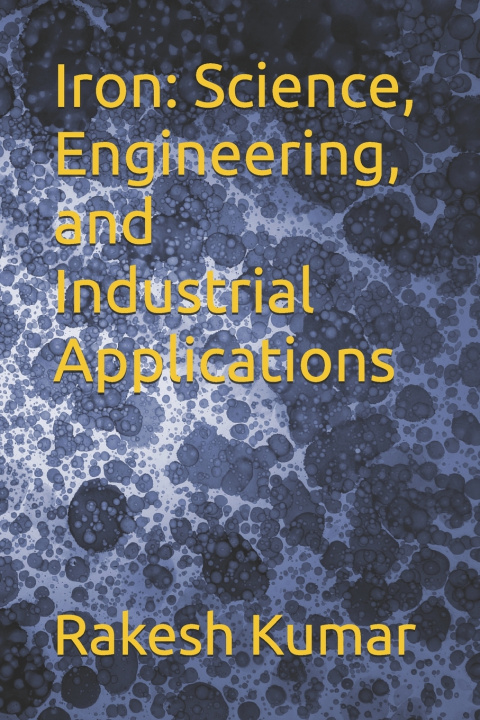
Iron is one of the most important elements in human civilization and has played a fundamental role in the development of technology, engineering, infrastructure, manufacturing, transportation, energy and modern industry. From the earliest use of naturally occurring meteoric iron and primitive iron tools to today's high-strength steels, advanced alloys, automobiles, bridges, railways, ships, power plants and sophisticated industrial machinery, iron has continuously evolved alongside human progress. Its unique combination of availability, strength, ductility, toughness, magnetic properties, manufacturability, alloying capability and recyclability has made iron-based materials indispensable to modern society. Although pure iron has relatively limited engineering applications because of its softness and strength limitations, its ability to combine with carbon and other alloying elements creates a remarkable family of materials with widely different mechanical, thermal, electrical, magnetic and corrosion properties.
The journey of iron from the Earth to an engineering component is a complex multidisciplinary process. Iron occurs naturally in minerals such as hematite, magnetite, goethite and siderite, which must be explored, mined, processed and upgraded before they can be converted into useful metallic products. Iron ore beneficiation involves operations such as crushing, screening, grinding, magnetic separation, gravity separation, flotation, concentration and pelletization. The prepared raw materials are subsequently transformed into metallic iron through processes such as blast-furnace ironmaking, direct reduction and smelting reduction. Traditional ironmaking has relied heavily on coke, coal and carbon monoxide, while modern technologies are increasingly investigating natural gas, hydrogen and electricity as alternatives. These developments are particularly important because iron and steel production is energy intensive and contributes significantly to global industrial greenhouse-gas emissions.
The science of iron extends from atomic structure to large-scale industrial systems. The electronic configuration of iron influences its bonding, magnetism, chemical behavior and interactions with other elements. Its allotropy, including body-centered cubic and face-centered cubic crystal structures, plays a critical role in phase transformations and materials processing. The iron-carbon system provides the scientific foundation for understanding ferrite, austenite, cementite, pearlite, bainite and martensite. Through controlled alloying, heat treatment, thermomechanical processing and surface engineering, engineers can tailor iron-based materials for specific applications. Carbon steels, alloy steels, stainless steels, cast irons and advanced high-strength steels demonstrate the extraordinary versatility of iron as an engineering material.
Iron and steel are deeply integrated into almost every major engineering sector. Automotive structures, aircraft components, railway systems, buildings, bridges, pipelines, industrial machines, turbines, generators, electrical equipment and manufacturing tools all depend extensively on iron-based materials. At the same time, the industry is undergoing a major digital transformation through automation, industrial Internet of Things, robotics, artificial intelligence, machine learning, predictive maintenance and digital twins. These technologies can improve productivity, quality, safety, energy efficiency and process stability across mines, beneficiation plants, furnaces and steelmaking facilities.
The future of iron will increasingly be shaped by sustainability and decarbonization. Hydrogen-based direct reduction, renewable electricity, electric arc furnaces, improved recycling, carbon capture, electrified mining and advanced process control are creating new pathways toward low-carbon and potentially fossil-free iron and steel. Green hydrogen can reduce


Informații despre carte
engleză

Dăruiește această carte chiar astăzi
Este foarte ușor
1 Adaugă cartea în coș și selectează Livrează ca un cadou 2 Îți vom trimite un voucher în schimb 3 Cartea va ajunge direct la adresa destinataruluiBună ziua! Sunt Libroamiko, consilierul dumneavoastră de cărți.
Cu ce vă pot ajuta?