
 Contact
 Cum să cumpăr
Livrare
Consilier de cumpărături
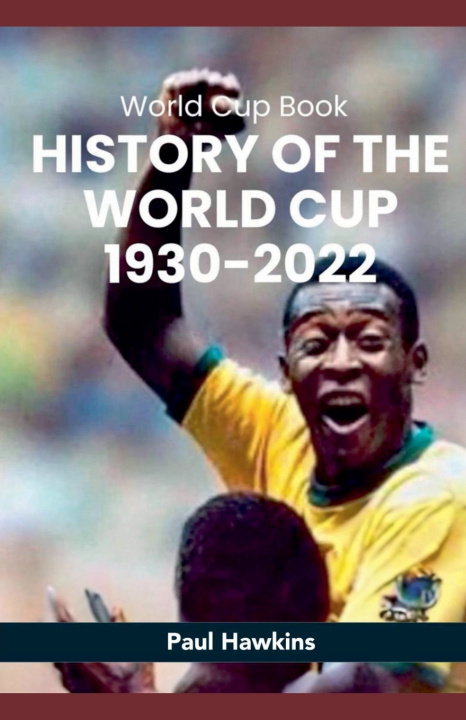
History of the World Cup 1930-2022
 engleză
 51 b
51 b
Până la 30 de zile pentru returnare
Clienții au cumpărat de asemenea







Jules Rimet, the person who is credited with founding the World Cup, was an ambitious man. He was responsible for driving FIFA, which was formed in 1904, much to the chagrin of the Football Association, from a sleepy organisation, in its earlier years, to the dynamic force the footballing world witnessed in the 1920s and 1930s. In 1914, FIFA agreed to recognise the Olympic football tournament as a world championship, and following WW1, the 1920, 1924 and 1928 Olympic Games staged the first truly international football tournaments. However, the Olympics was only for amateur competitors and many footballing nations in Europe had already formed professional leagues, so to recognise this development, something had to change.
On May 26th, 1928, FIFA met in Amsterdam and decided to organise its own international, professional football tournament. FIFA moved quickly, without the bureaucracy that exists today, and a year later met in Barcelona to elect the host country for the first World Cup in 1930. After much debate, FIFA gave way to Uruguay, who tabled the most convincing bid and seemed to have the finance and determination to host the event. Uruguay at that time was a small insignificant country with a population of scarcely 2 million and, for FIFA, it was a shot in the dark, the only risk they were to take in 60 years of selecting host countries, apart, perhaps, from the 1978 World Cup hosted by Argentina, which took place in the throes of a military revolution.
Little did they know what they had started. However, it worked and after initial reluctance by European countries to support the Uruguayans, four countries, Belgium, France, Rumania and Yugoslavia, agreed to participate and undertake the two-week sea voyage to South America. Argentina, Brazil, Paraguay, Peru, Chile, Bolivia, Mexico and the USA joined Uruguay in what has become a historic event. Little did these nations know what they had started and what lay in store for the World Cup over the next 96 years.
Despite some concerns, if the 1930 World Cup had not taken place, this would definitely not have been the end of it. FIFA's next attempt would have been to stage the World Cup in Europe and it would have gone ahead with or without the South Americans. Eventually, with the advent of inter-continental air travel, they would have seen the benefit in taking part in what would still have been the first global professional football tournament. The South Americans all have passion, pride and an inbred desire to display their talents and they would all have wanted to do it not just in their own back yard but also on the global stage, not forgetting, of course, Argentina and Uruguay had both travelled to Europe - and excelled - in the 1924 and 1928 Olympic Games.
Read on about the "beautiful game" as World Cup legend Pelé called it on the highest platform of all, sadly only staged once every four years. Read about the remarkable Pelé, a global icon at the age of 17, the Magical Magyars, the shocks of 1950 and 1954, the brilliant Brazilians of the 1960s, the resurgent Argentinians of 1978, 1986 and 2022, - yes, they keep coming back - Alf Ramsey's triumph in 1966, and of course, the ever-consistent Germans and Italians, faced with the growing dominance of Spanish football.


Informații despre carte
engleză
Categorii

Dăruiește această carte chiar astăzi
Este foarte ușor
1 Adaugă cartea în coș și selectează Livrează ca un cadou 2 Îți vom trimite un voucher în schimb 3 Cartea va ajunge direct la adresa destinataruluiAr putea de asemenea, să te intereseze
 /
/
 Carte broșată
 1 254.48
lei
1 254.48
lei


Bună ziua! Sunt Libroamiko, consilierul dumneavoastră de cărți.
Cu ce vă pot ajuta?