
 Contact
 Cum să cumpăr
Livrare
Consilier de cumpărături
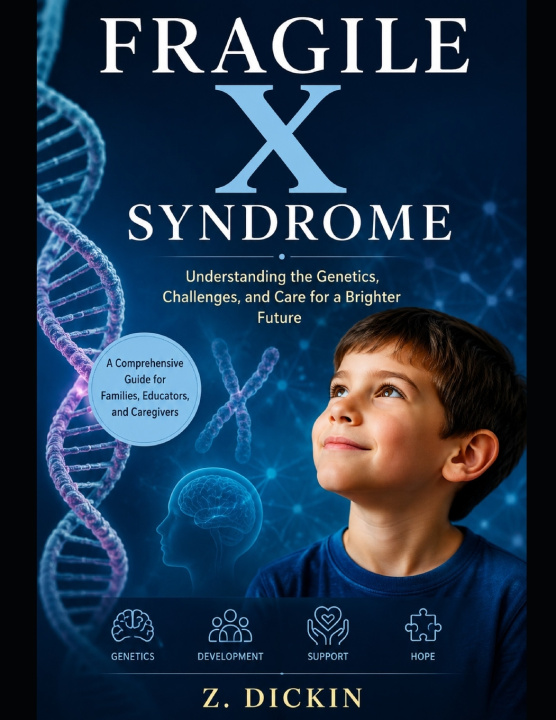
Fragile X syndrome
 engleză
 49 b
49 b
 Nou
Nou
Până la 30 de zile pentru returnare

Fragile X syndrome is one of the most important inherited causes of intellectual and developmental disability and represents a fascinating example of the relationship between genetics, brain development, behavior, and human health. Although considerable progress has been made in understanding the condition, many families, students, educators, and healthcare professionals continue to seek clear and comprehensive information about its causes, diagnosis, management, inheritance, and lifelong impact.
This book, Fragile X Syndrome, has been written to provide an accessible and comprehensive overview of the condition. It brings together fundamental concepts in genetics and molecular biology with practical information about development, education, healthcare, family life, adulthood, and emerging research.
The book begins by introducing Fragile X syndrome and explaining the genetic basis of the disorder. Particular attention is given to the FMR1 gene, the CGG repeat expansion, FMRP, premutation and full-mutation alleles, methylation, mosaicism, and the distinctive inheritance pattern of Fragile X-related disorders.
The following chapters explore the clinical and developmental characteristics of Fragile X syndrome. Topics include intellectual and learning difficulties, speech and language development, behavioral characteristics, social communication, sensory processing, anxiety, seizures, sleep, physical characteristics, and associated medical conditions. Understanding these features can help readers appreciate the considerable variation between individuals.
A major emphasis of this book is the importance of individualized and person-centered support. No two people with Fragile X syndrome are exactly alike. Some individuals may require extensive lifelong assistance, whereas others may develop substantial independence. Educational strategies, speech-language therapy, occupational therapy, behavioral interventions, psychological support, medical care, and family assistance can all contribute to improved functioning and quality of life.
The book also addresses the experiences of adolescents and adults. Transition planning, vocational training, employment, independent or supported living, relationships, sexuality education, financial skills, transportation, healthcare self-advocacy, and community participation are important aspects of adult life that deserve attention.
Another important theme is the genetic impact on families. The concepts of premutation, full mutation, genetic expansion, anticipation, Fragile X-associated primary ovarian insufficiency, and Fragile X-associated tremor/ataxia syndrome are discussed to provide a broader understanding of the Fragile X spectrum.
Research and future therapies are also examined. Advances in molecular biology have created interest in gene reactivation, gene therapy, gene editing, epigenetic approaches, RNA-based strategies, targeted pharmacological treatments, biomarkers, and precision medicine. Many of these approaches remain experimental, and scientific evidence must be carefully distinguished from unproven claims.
The purpose of this book is therefore not simply to describe a genetic disorder. It is to present Fragile X syndrome within the context of human development and lifelong well-being. A diagnosis should never be viewed as a complete description of an individual's abilities, personality, aspirations, or future.
Families and individuals affected by Fragile X syndrome often demonstrate remarkable resilience. With appropriate educational opportunities, healthcare, social support, advocacy, and encouragement, many individuals can develop meaningful skills, relationships, interests, and roles within their communities.


Informații despre carte
engleză
