
 Contact
 Cum să cumpăr
Livrare
Consilier de cumpărături
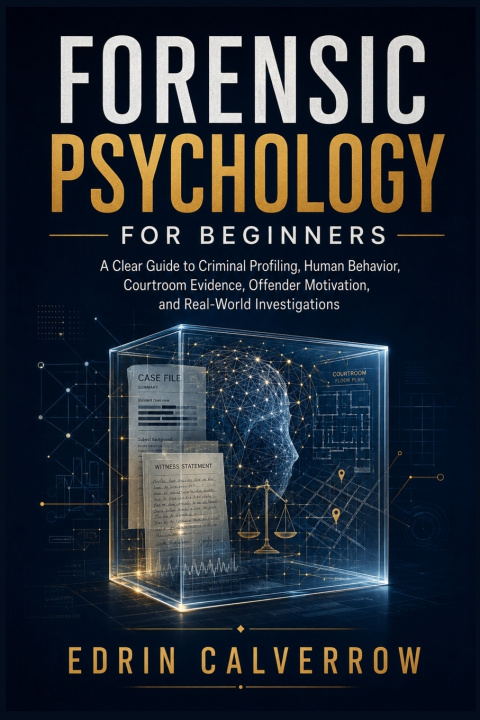
Forensic Psychology For Beginners
A Clear Guide to Criminal Profiling, Human Behavior, Courtroom Evidence, Offender Motivation, and Real-World Investigations
 engleză
 39 b
39 b
 Nou
Nou
Până la 30 de zile pentru returnare

What makes a person cross the line from thought to action? Why do witnesses remember the same event differently? How do investigators use behavior without falling into dangerous assumptions? And what does forensic psychology really look like beyond crime shows and dramatic headlines?
Forensic Psychology For Beginners is a clear, engaging, and responsible introduction to the fascinating intersection of psychology, crime, evidence, and the justice system. Written for curious readers with no background in psychology or law, this guide explains how professionals think about criminal behavior, offender motivation, courtroom evidence, eyewitness memory, trauma responses, interrogations, expert testimony, and real-world investigations.
Instead of sensationalizing crime or reducing people to labels, this book teaches you how to think more carefully. You will learn why behavior is rarely caused by one simple factor, why motive is not always obvious, why profiling has limits, and why evidence must always guide interpretation.
Inside, you will discover:
• What forensic psychology really is and what it is not
• How human behavior, stress, emotion, and environment shape decisions
• The difference between motive, intent, opportunity, and planning
• What criminal profiling can reveal and where it can mislead
• How behavioral evidence supports investigations without replacing proof
• Why victims, witnesses, and suspects may behave in unexpected ways
• How memory can be sincere but imperfect
• Why false confessions can happen under pressure
• How mental health is considered in legal settings without stigma
• What expert witnesses do in court and why their limits matter
• How risk assessment works and why it is never fortune-telling
• Why ethics, bias, and professional responsibility are central to justice
Whether you are a true-crime reader, psychology student, criminal justice student, aspiring forensic professional, or simply someone who wants to understand human behavior more deeply, this book gives you a grounded foundation without overwhelming academic jargon.
You will not learn how to "read minds" or solve crimes from a few clues. Instead, you will learn something far more useful: how to ask better questions, separate evidence from assumption, and understand crime through a more thoughtful, ethical, and evidence-informed lens.
If you want a beginner-friendly guide that makes forensic psychology clear, practical, and genuinely fascinating, this book is a strong place to begin.


Informații despre carte
engleză

Dăruiește această carte chiar astăzi
Este foarte ușor
1 Adaugă cartea în coș și selectează Livrează ca un cadou 2 Îți vom trimite un voucher în schimb 3 Cartea va ajunge direct la adresa destinataruluiBună ziua! Sunt Libroamiko, consilierul dumneavoastră de cărți.
Cu ce vă pot ajuta?