
 Contact
 Cum să cumpăr

Livrare
Consilier de cumpărături
Dermatopathology
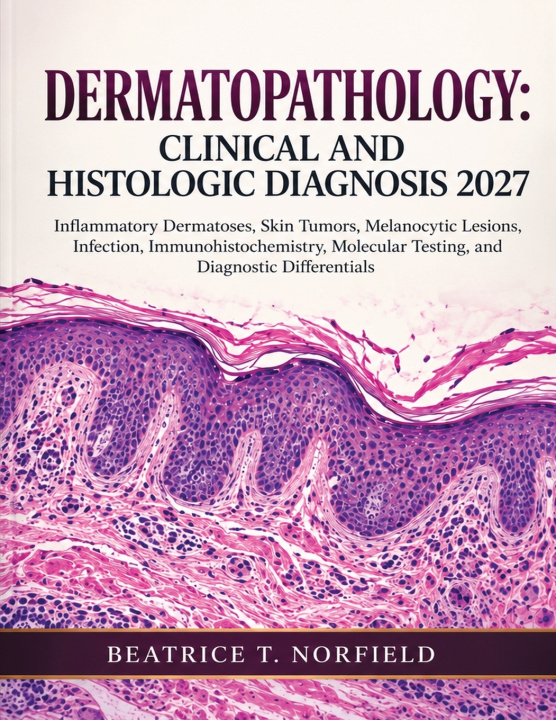
Clinical and Histologic Diagnosis 2027: Inflammatory Dermatoses, Skin Tumors, Melanocytic Lesions, Infection, Immunohistochemistry, Molecular Testing, and Diagnostic Differentials
 engleză
 430 b
 Curând
 Nou
Până la 30 de zile pentru returnare

Two skin lesions may appear remarkably similar under the microscope yet represent entirely different disease processes. Recognizing the distinction requires more than identifying abnormal cells.
A pattern of epidermal inflammation may have several possible explanations. A pigmented lesion may present features that challenge the boundary between benign and malignant disease. In other cases, the significance of a tissue finding becomes clearer only after considering the clinical presentation, immunohistochemical results, or additional molecular evidence.
DERMATOPATHOLOGY: CLINICAL AND HISTOLOGIC DIAGNOSIS 2027 explores the diagnostic relationship between the visible manifestations of skin disease and the microscopic changes that characterize them.
The reference examines major areas of cutaneous pathology, with attention to the distinguishing features, overlapping appearances, and interpretive challenges encountered during histologic assessment.
The principal areas of discussion include:
Inflammatory dermatoses: Examining tissue reaction patterns and the features that help differentiate inflammatory skin conditions.
Skin tumors and melanocytic lesions: Understanding histologic characteristics, architectural abnormalities, and diagnostic considerations in benign and malignant proliferations.
Cutaneous infections: Investigating microscopic findings associated with infectious processes and their potential resemblance to noninfectious disorders.
Immunohistochemistry and molecular testing: Exploring the diagnostic contributions of ancillary investigations when conventional morphology requires further clarification.
Diagnostic differentials: Considering competing explanations for similar microscopic findings and the importance of clinicopathologic correlation.
Designed for pathology residents, dermatology trainees, medical students, and healthcare professionals studying skin biopsy interpretation, this volume addresses a discipline in which small architectural details and subtle cellular changes can carry considerable diagnostic significance.
The discussion recognizes that microscopic appearances alone do not always establish the complete diagnosis. Clinical history, lesion distribution, tissue architecture, cellular morphology, and appropriately selected ancillary investigations must be evaluated together.
The central task of dermatopathology is not merely to identify what appears beneath the microscope, but to determine what those findings establish, what remains uncertain, and which diagnostic possibilities deserve further consideration.


Informații despre carte
engleză

Dăruiește această carte chiar astăzi
Este foarte ușor
1 Adaugă cartea în coș și selectează Livrează ca un cadou 2 Îți vom trimite un voucher în schimb 3 Cartea va ajunge direct la adresa destinataruluiBună ziua! Sunt Libroamiko, consilierul dumneavoastră de cărți.
Cu ce vă pot ajuta?