Contact
 Cum să cumpăr
Livrare
Consilier de cumpărături
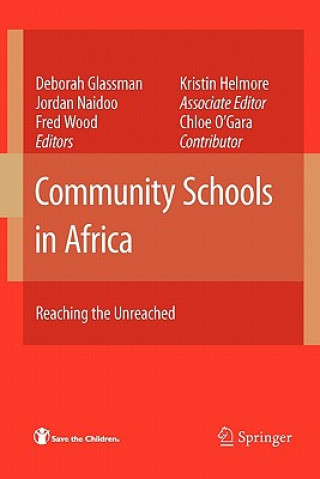
Community Schools in Africa
Reaching the Unreached
 engleză
 129 b
129 b
Până la 30 de zile pentru returnare
Clienții au cumpărat de asemenea









 /
/
 Carte broșată
 150.32
lei
150.32
lei

This book explores questions related to the recent establishment in Africa of community schools similar to those supported by Save the Children. The book addresses the serious doubts about realizing the Education for All and Millennium Development Goals. It draws on Save the Children s experience with community-based schooling in four countries: Ethiopia, Malawi, Mali, and Uganda.Over the past decade, community schools similar to those supported by Save the Children have been established in many developing countries, and especially in sub-Saharan Africa. As large numbers of children attend schools started and managed by their own communities and/or by nongovernmental organizations, questions have come up about the impact of such schools at large scale: "Can village-based or community schools have a national impact on access to education, spur improved long-term development strategies and education policy, or achieve or influence Education for All? This book explores these and related questions, drawing on Save the Children s experience with community-based schooling in four countries: Ethiopia, Malawi, Mali, and Uganda. The literature on community schools in Africa tends to be sparse, repetitive and highly descriptive with little or no sustained critique of practice. This book fills a substantial gap in the education literature and is particularly timely, given the current emphasis on decentralization and community involvement in education. §Save the Children has been a pioneer in the community school movement, particularly in Africa. Community schools are created in areas where access to education is limited or non-existent. The community school approach has been recognized for its easy replicability, cost-effectiveness and dramatic improvements in basic education for children in need.


Informații despre carte
engleză
Categorii

Dăruiește această carte chiar astăzi
Este foarte ușor
1 Adaugă cartea în coș și selectează Livrează ca un cadou 2 Îți vom trimite un voucher în schimb 3 Cartea va ajunge direct la adresa destinataruluiAr putea de asemenea, să te intereseze




 /
Carte broșată
91.90
lei
/
Carte broșată
91.90
lei


 /
Copertă tare
1 341.27
lei
/
Copertă tare
1 341.27
lei








 /
Copertă tare
157.52
lei
/
Copertă tare
157.52
lei