
 Contact
 Cum să cumpăr
Livrare
Consilier de cumpărături
 engleză
 56 b
56 b
 Curând
 Nou
Nou
Până la 30 de zile pentru returnare

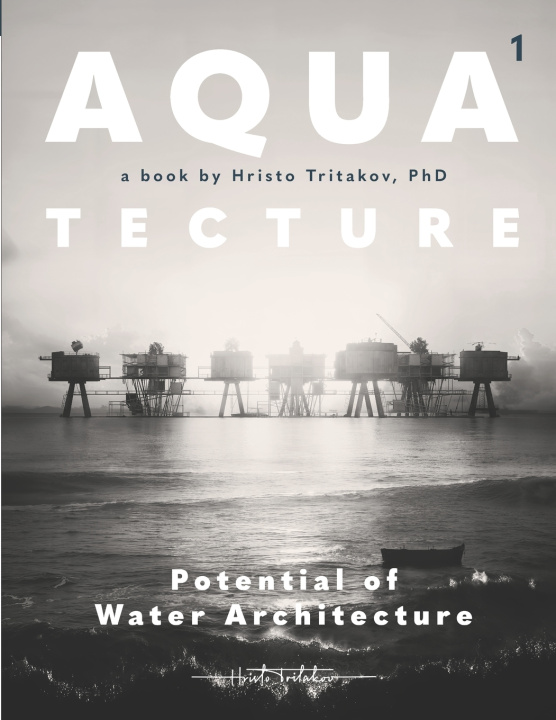
The aquatory has the potential to accommodate a vast number of new urban residential and public functions, which would enable the city to become considerably more compact.
This type of planning will ensure a more favourable living environment provided that the qualities of the aquatic areas are not harmed and that these territories are optimally incorporated into the urban fabric.
Aquatecture provides solutions to the problems associated with global warming and the rise of the Global Sea level.
In such cases, coastal areas should be adapted to enable the cities to function effectively and ensure the residents' safety even in case of floods or other natural water-related disasters.
RELEVANCE OF THE RESEARCH
Contemporary architecture is a dynamically developing system which, despite its multi-layered and rapid development under the conditions of globalisation, fails to meet modern high societal criteria for living. The problems of human security, overpopulation, overconstruction, increasing number of natural disasters, careless use of Earth's water and energy resources, etc., remain unsolved and even tend to deepen with time.
The possible vision of the future, in which architecture in an aquatic environment is an integral part of human life and develops its potential, both at urban and local planning levels, would be of great benefit to society. People's affinity to water, the location of key urban centres near large bodies of water, innovations in construction and industrial and scientific developments are all positive factors in the pursuit of significant architectural answers providing solutions for high quality life and optimal use of aquatic environments.
The static nature of conventional architecture, as well as the lack of space on the mainland, appear to be the main problem of almost all large cities around the world. Aquatic architecture is a significant alternative to today's limited opportunities for construction on land. Designing in such a context has long outgrown the concepts of utopian cities and the naivety of imagination of future urban planning. Despite the fact that conceptual designs outnumber realisations, ideas and the experience coming from the Netherlands, as well as numerous aquatic settlements worldwide, prove that the benefits of this type of design are essential for architectural practices. They should be analysed in order to contribute to a more widespread application of aquatecture around the world.
A global paradox is that life in water environments is typical of both poor social groups - prototypes of marine settlements in Africa and Northeast Asia and people with a luxurious and extravagant lifestyle, such as those in Dubai and the Maldives (regions with high-end tourism associated with affluent lifestyles in an aquatic environment).
Such social differences are unacceptable and should be avoided with the development of humanity in the 21st century.
The key to aquatic architecture should be its accessibility for all social classes and its primary focus should be the optimal use of marine areas, improving people's quality of life and increasing security levels against natural disasters in aquatic settlements.
DISCUSSION QUESTIONS
- Is it possible for aquatic architecture to become a global phenomenon?
- Can aquatic living reach the comfort level of building on land using a similar realisation budget?
- To what extent would the construction of cities into the surrounding aquatory enrich, improve or compromise the qualities of urban development on coastal territories?
- Should we look for a new archetype, new materials and technologies to transform the marine projects into a logical and harmonious part of the surrounding aquatory?
- What would be the future scenarios for the mass use of aquatecture worldwide?


Informații despre carte
engleză
Categorii

Dăruiește această carte chiar astăzi
Este foarte ușor
1 Adaugă cartea în coș și selectează Livrează ca un cadou 2 Îți vom trimite un voucher în schimb 3 Cartea va ajunge direct la adresa destinataruluiBună ziua! Sunt Libroamiko, consilierul dumneavoastră de cărți.
Cu ce vă pot ajuta?